
Identity is a Gift
February 20, 2026
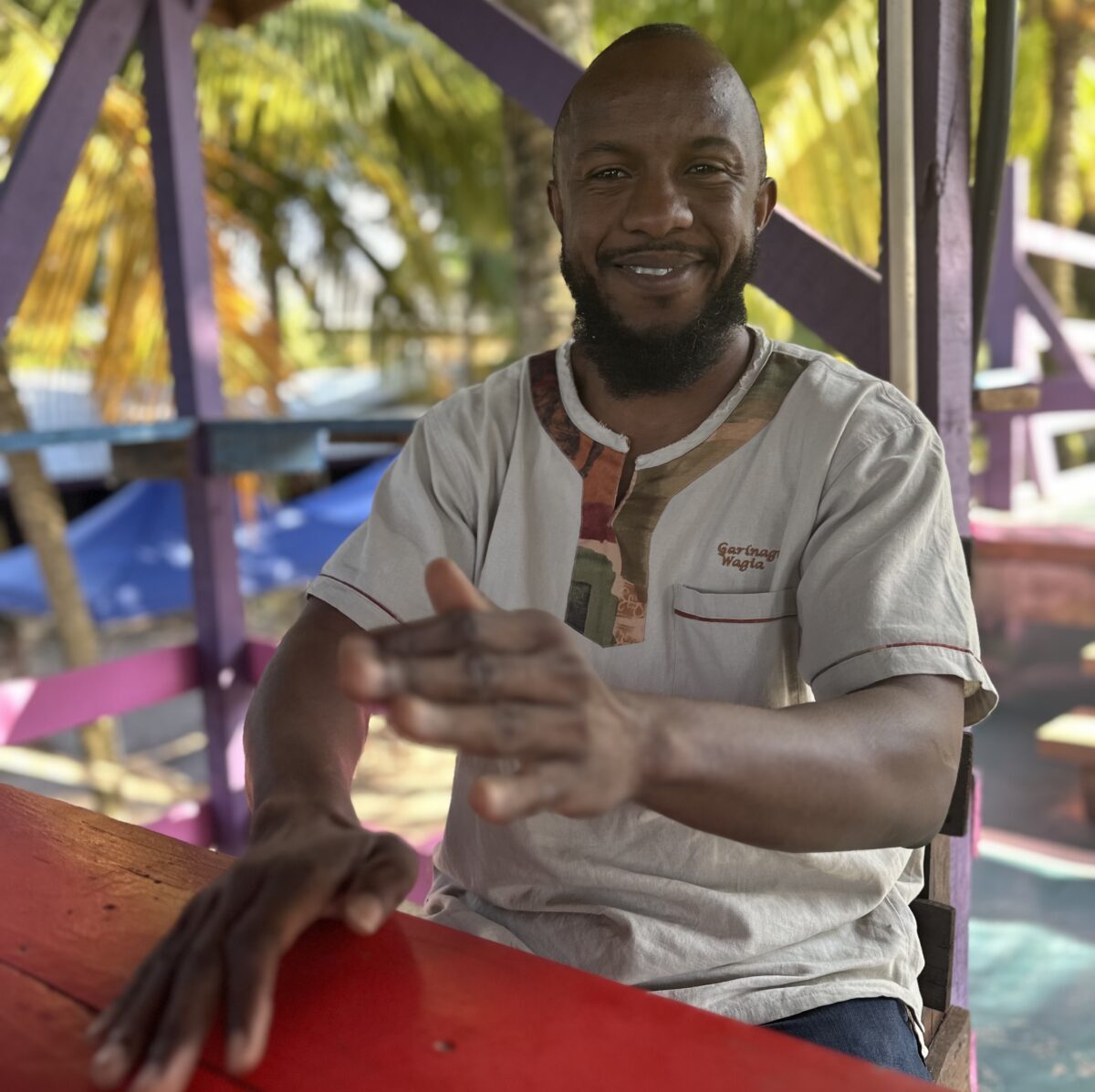 “Language and identity are human rights,” César shares without hesitation.
We are talking about the work underway in Honduras through Change for Children’s Intercultural Bilingual Education (IBE) for Quality and Equality in Honduras project. For César — the project’s IBE Curriculum Coordinator — this work is deeply personal. A proud Garífuna, he carries his culture with him wherever he goes, often hand-drumming the rhythms of his native roots on whatever surface is nearby.
César comes from a family of teachers. At home, his mother spoke Garífuna. At school, he learned Spanish and English. Moving between languages meant moving between worlds, an experience that shaped both his identity and his calling. Today, he is the first person to defend his Masters of Language and Culture thesis in his native Garífuna language at the National Autonomous University of Honduras (UNAH), a powerful act in the ongoing effort to revitalize minority languages.
In Honduras, teachers must hold professional diplomas. Yet the national curriculum does not always reflect the country’s rich diversity, including nine distinct Indigenous peoples. Too often, bilingual education has meant simple word-for-word translation. César believes it must be much more.
“We need to sensitize teachers,” he explains. “Intercultural education is not only about competencies. It’s about recognizing students’ identities, languages, and lived realities.”
Through this project, teachers are learning methodologies that honour culture and language in meaningful ways — not just translating content, but centering students’ identities in the classroom. Parents are also being engaged, because language transmission begins at home. In many Garífuna communities, elders are no longer passing the language to younger generations. Today, an estimated 70% of communities are experiencing language loss.
And when a language is lost, César says, far more disappears with it. Identity is lost. Knowledge is lost. Ways of understanding the world are lost.
For César, preserving language is an act of dignity and decolonization. It is a way of valuing cultural diversity and enriching not only one community, but all of society. Language connects people to place, to history, and to one another. As a carrier of culture, knowledge, and heritage, language brings with it an intrinsic sense of belonging. Without a connection to these roots, says César, young people can become untethered and vulnerable.
The goal, he says, is to cultivate strength, pride, and self-esteem in the next generation, so they grow up knowing that their language, their culture, and their identity are not obstacles, but gifts.
On International Mother Language Day, we celebrate the richness and beauty of every culture and the vital work of educators like César who are ensuring that languages and the identities they carry continue to thrive.
Central America and the Caribbean Education Honduras In The Field Indigenous Peoples